As of November 2025, the Strengthened Aged Care Quality Standards have come into effect under the new Aged Care Act and the Support at Home Program. These reforms represent a significant shift in how aged care is delivered across Australia, with a stronger focus on consistency, accountability, and better outcomes for older people.
At the centre of these changes is Standard 1: The Person. For many providers, the first question is often ‘what is Standard 1 in aged care, and why does it matter?’ Simply put, this standard sets the foundation for everything that follows. It underpins all other standards and establishes the expectations for how care and services should be delivered.
When you focus on the person first, taking the time to understand their values, preferences, culture, and life story, care becomes more meaningful and easier to deliver well. Systems align, decisions make sense, and quality improves naturally. Standard 1 isn’t about adding more red tape. It’s about returning to the heart of aged care: recognising, respecting, and supporting the individual in front of you.
What is Standard 1 in Aged Care?
Standard 1 begins with the voices that matter most:
For older people: “I am valued and have a choice over the life I lead.”
For Workers: “I understand the people I care for and support them in choices that impact their lives.”
This standard places the individual at the centre of all care and services. It requires providers to truly know the people they support—their background, life experiences, values, and preferences. Care should reflect who the person is, not just the services they need.
Standard 1 includes four outcomes and 21 actions. These don’t introduce new concepts, but they do set clearer expectations for how person-centred care should look in practice. There is a strong focus on recognising diversity, including the specific needs of First Nations people and those living with dementia.
If you’re wondering what happened to the 8 Standards of aged care, they have now been replaced by seven strengthened standards. Aged care Standard 1 sits at the core of this framework. When you understand and apply it well, delivering genuine person-centred care becomes much easier.
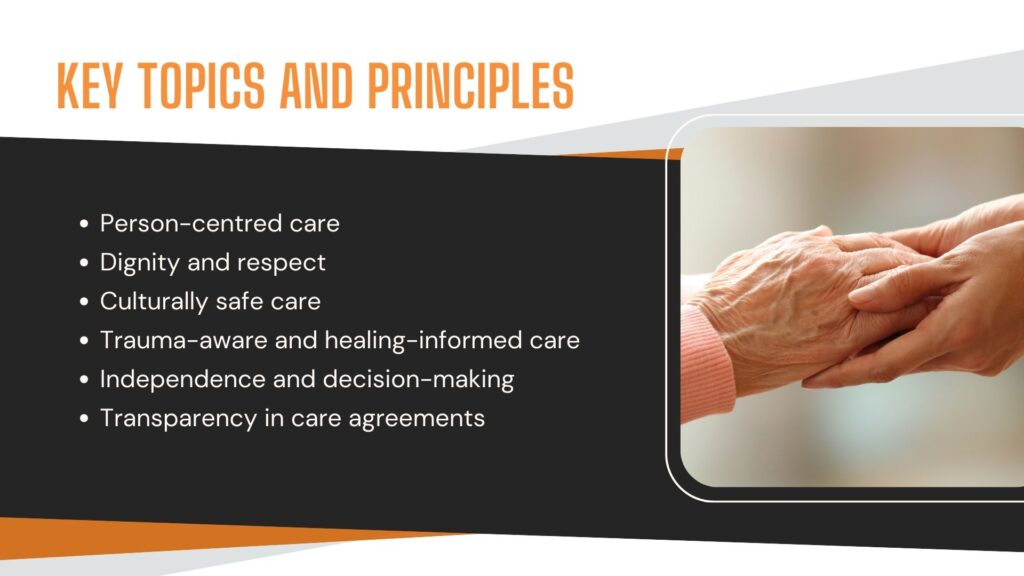
Key Topics and Principles
Providers must apply the following principles in daily care and service delivery:
- Person-centred care: Build professional, trusting relationships with each individual. Understand their history, preferences, and needs to deliver care that reflects who they are.
- Dignity and respect: Treat every person with respect. Protect their privacy, support their rights, and offer real choice in how they live.
- Culturally safe care: Recognise and respond to cultural identity. This includes providing care that is safe, appropriate, and respectful—particularly for First Nations people and those living with dementia.
- Trauma-aware and healing-informed care: Understand that past trauma may affect how care is received. Create an environment that supports healing and emotional safety.
- Independence and decision-making: Support older people to make their own choices, including the right to take risks. If they need help deciding, involve a substitute decision-maker only after trying all options to support their independence.
- Transparency in care agreements: Be open and honest about care arrangements. Make sure agreements are clearly explained and understood.
These principles are not optional. They are the foundation of safe, respectful, and effective aged care.
Required Outcomes and Actions
Standard 1 includes 4 outcomes and 21 actions. All actions align with or build on existing responsibilities. They focus on recognising each person’s needs, rights, and preferences.
Outcome 1.1: Person-centred care
Care and services are tailored to the individual’s needs, preferences, and life experiences
Actions:
- Understand and value the older person’s identity, culture, diversity, beliefs, and life experiences.
- Develop care and services in partnership with the older person, considering their needs, goals, and preferences.
- Provide culturally safe care that respects the older person’s cultural identity.
- Deliver trauma-aware and healing-informed care that acknowledges past experiences.
- Support the older person’s autonomy and decision-making.
- Foster professional and trusting relationships between staff and the older person.
Outcome 1.2: Dignity, respect, and privacy
Older people are treated with dignity and respect, free from discrimination, and their privacy is upheld.
Actions:
- Treat the older person with dignity and respect in all interactions.
- Ensure the older person receives care and services free from discrimination.
- Respect and uphold the older person’s personal privacy.
Outcome 1.3: Choice, independence, and quality of life
Older people are supported to make choices about their care and services, maintain their independence, and achieve quality of life.
Actions:
- Support the older person’s independence and ability to make decisions about their care and services.
- Provide information in a way that supports the older person’s understanding and decision-making.
- Support the older person’s right to take risks that they understand and accept.
- Use supported decision-making approaches to assist the older person in making choices.
- Identify and involve substitute decision-makers when the older person is unable to make decisions.
- Promote the older person’s quality of life by supporting their goals and preferences.
- Address communication barriers to support the older person’s participation in decision-making.
Outcome 1.4: Transparency and agreements
Care and service agreements are transparent, and the older person is informed and involved in decisions.
Actions:
- Provide clear and understandable information about care and services to the older person.
- Develop care and service agreements in partnership with the older person.
- Ensure the older person understands the terms and conditions of their care and service agreements.
- Support the older person’s autonomy by involving them in decisions about their care and services.
- Use open disclosure practices when things go wrong, informing the older person and taking appropriate actions.
Demonstrating Conformance
To meet Standard 1, you need to clearly show how person-centred care works in everyday practice. This means taking consistent action, keeping proper records, and regularly reviewing how care is delivered, with input from the people you support.
Document your systems and processes
Keep clear and up-to-date records, including care plans, service agreements, and risk assessments. Use plain language and show how decisions are made, reviewed, and updated over time. Strong documentation supports audits, internal reviews, and continuous improvement. More importantly, it shows that you genuinely understand and apply a person-centred approach in line with the aged care quality standards.
Monitor and observe care delivery
Put practical checks in place to make sure staff follow policies and procedures. Use tools such as checklists, internal audits, and direct observations. Regularly review whether care reflects each person’s preferences, rights, and choices. Real examples and case studies help demonstrate that policies are being followed in day-to-day care.
Engage with the people you care for
Actively involve older people in developing and reviewing their care plans. This builds trust and ensures services focus on what matters most to them. When care is co-designed, it naturally supports dignity, choice, and independence, key expectations under Standard 1.
Collect and use feedback
Seek feedback from older people, families, staff, and your governing body. Use surveys, complaints, compliments, and informal conversations. Most importantly, act on what you hear. Show how feedback leads to real improvements, such as changes to procedures, staff training, or care practices. Ongoing feedback helps strengthen quality, accountability, and compliance.
Reflective Questions for Providers
Use these questions to pause and assess how well your service aligns with the intent of Standard 1. They’re designed to support ongoing reflection and improvement in person-centred care.
- How do you tailor care to each person’s life story and preferences?
- How do you support older people in making decisions—including those involving risk?
- What systems are in place to make sure culturally safe and trauma-aware care is provided?
- How do you act on feedback from older people and staff?
SAH Consulting: Your Partner in Navigating Support at Home Complexities
SAH Consulting supports aged care providers across Australia as they adapt to regulatory change under the Support at Home Program and the strengthened aged care standards. Our team brings hands-on experience and practical insight to help you move forward with confidence.
We don’t just help you meet requirements, we help you build a sustainable, compliant business. Our support includes:
- Support at Home registration and readiness – Guidance through the registration process, including understanding eligibility, obligations, and ongoing requirements.
- Aged care compliance support – Clear, practical advice on applying the strengthened aged care standards, including documentation reviews, gap assessments, and audit preparation.
- Regulatory updates and guidance – Ongoing support to help you stay informed about changes to legislation, standards, and expectations—so nothing catches you off guard.
- Client acquisition strategies – Targeted marketing support to help you attract and retain clients, build referrals, and grow demand for your services.
- Business development and operational support – Practical guidance to refine your service offerings, streamline operations, and strengthen your position in the market.
By partnering with SAH Consulting, you gain access to a team of experienced professionals who understand both compliance and commercial realities in the aged care sector. Preparing early reduces pressure, improves audit outcomes, and sets your service up for long-term success.
Final Thoughts
Now is the time to take action. Review your systems, engage your workforce, and start embedding person-centred care into everyday practice. These changes don’t need to feel overwhelming, and you don’t have to navigate them on your own.
If you’re still clarifying what Standard 1 in aged care is and how it applies to your service, there are many reliable resources available online. These materials outline expectations and can help you plan with confidence under the strengthened aged care framework.
Need practical guidance? SAH Consulting is here to support you. We offer a free consultation to help you understand where you stand and what steps to take next. Our team provides tailored advice and hands-on support, from registration readiness through to ongoing compliance and audit preparation. The sooner you reach out, the more confident and prepared you’ll be to meet current requirements and move forward with clarity.