Australia’s aged care landscape requires providers to look beyond ongoing classifications. For healthcare service providers and home care organisations, short-term aged care pathways represent critical operational channels for clinical intervention, client acquisition, and targeted service delivery.
Under the Support at Home program, these structured pathways allow organisations to address acute needs efficiently without exhausting a client’s ongoing quarterly budget.
3 Short-Term Pathways to Fund – But Better
1. Restorative Care Pathway: Intensive Function and Reablement
The Restorative Care Pathway provides intensive allied health and nursing services designed to restore a participant’s function and prevent further decline.
Unlike older programs, an episode delivers a dedicated funding unit of around $6,000 for up to 16 weeks of intensive services, separate from ongoing Support at Home budgets. For eligible participants, an additional unit may be approved, providing up to $12,000.
- Multidisciplinary Coordination: Care is driven by a multidisciplinary team (such as physiotherapists, occupational therapists, and exercise physiologists) working alongside a restorative care partner.
- Goal-Centric Planning: Providers must collaborate with participants to establish a formal goal plan within a strict 16-week window, with no options for temporary leave.
- Funding Integration: Participants may also access assistive technology and low- to medium-tier home modifications during their episode to support functional recovery.
For providers looking to integrate this specialised model into their operations, incorporating short term restorative care effectively requires structured multidisciplinary oversight and robust exit planning from day one.
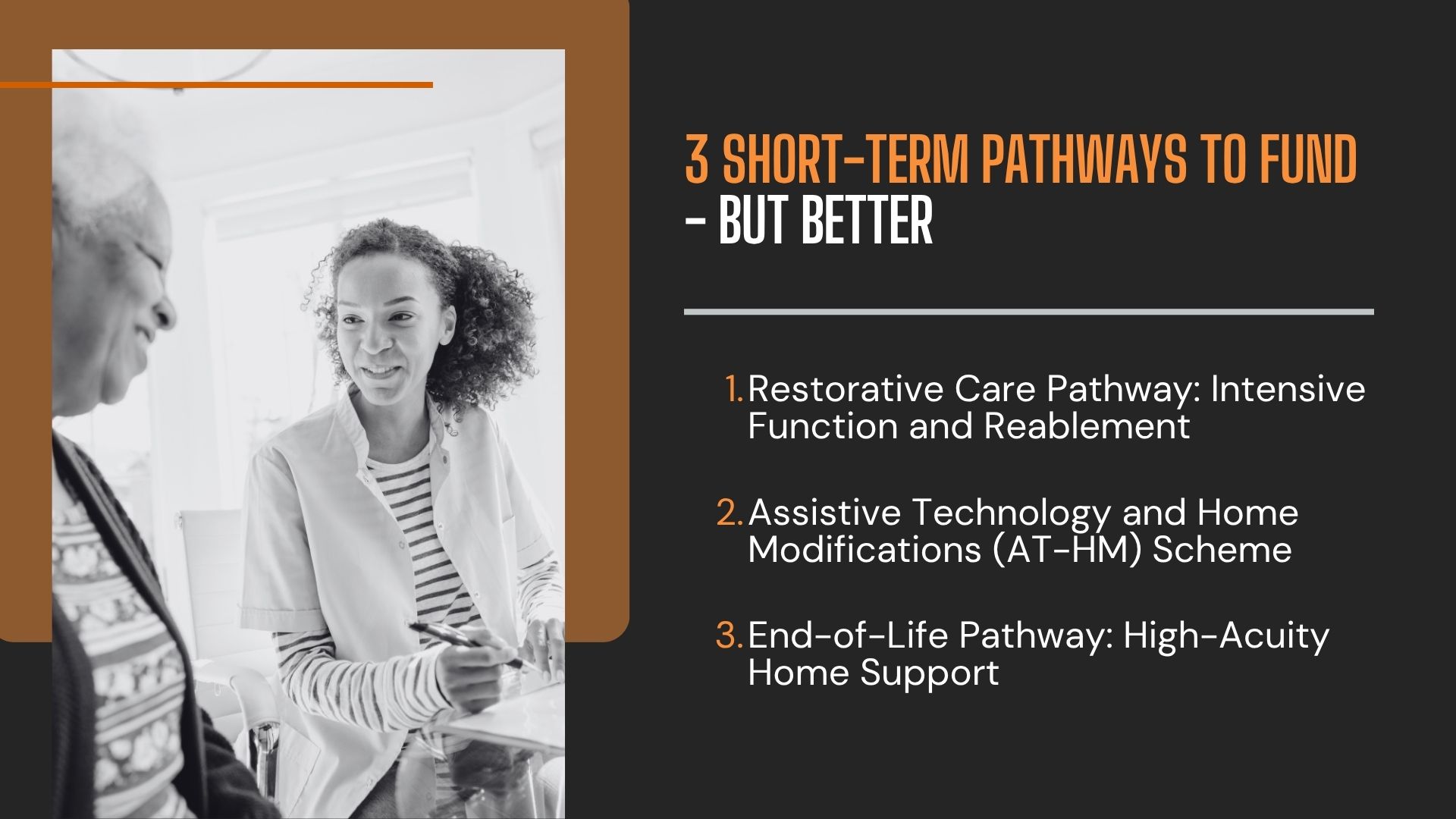
2. Assistive Technology and Home Modifications (AT-HM) Scheme
Equipment and structural changes are vital for maintaining independence, yet they have historically caused administrative friction. The AT-HM scheme gives participants separate access to equipment and modifications through tiered funding pools (low, medium, and high tiers up to or exceeding $15,000), independent of quarterly service budgets.
- Targeted Scoping: Funding covers assistive technology, home modifications, and associated wraparound services or prescriptions from suitably qualified health professionals.
- Transition Rules: Participants transitioning from the former Home Care Packages Program utilise unspent Commonwealth funds in the first instance before drawing on allocated AT-HM accounts.
- Specialised Compliance: Providers are responsible for sourcing items, coordinating prescriptions, maintaining detailed delivery records, and managing repairs through the participant’s AT-HM allocation.
Mastering the procurement workflows for home modifications aged care allows organisations to build reliable equipment supply chains and streamline client onboarding.
3. End-of-Life Pathway: High-Acuity Home Support
The End-of-Life Pathway supports older people diagnosed with 3 months or less to live who wish to remain at home. Designed to complement state and territory palliative care networks, this pathway provides around $25,000 over 12 weeks.
- Eligibility & Acceleration: Access requires assessment by a doctor or nurse practitioner, verifying a life expectancy of 3 months or less alongside an Australian-modified Karnofsky Performance Status (AKPS) score of 40 or lower.
- Intensive Clinical Delivery: Providers can claim uncapped care management against the participant’s dedicated funding account to coordinate complex nursing, personal care, and medical communication.
- Seamless Transitions: If care extends past 12 weeks, participants can utilise remaining funds up to the 16-week mark or request a Support Plan Review to transition to an ongoing classification.
Navigating end-of-life care in aged care demands rigorous clinical governance and rapid-response administrative pathways to ensure compassionate, uninterrupted support.
Partner with SAH Consulting for Strategic Operational Readiness
Navigating the complexities of the Support at Home program requires more than basic compliance—it demands operational precision across every service tier. At SAH Consulting, we help healthcare providers build robust clinical governance frameworks, streamline registration categories, and implement practical evidence tools that satisfy the Aged Care Quality and Safety Commission.
Whether you are scaling your allied health workforce for restorative episodes or establishing complex clinical oversight for palliative care, our team translates statutory reform into sustainable business growth.
Conclusion
The evolution of short-term aged care under the Support at Home framework redefines how providers deliver targeted, high-impact interventions. By mastering the operational nuances of restorative care, assistive technology, and palliative pathways, healthcare organisations can optimise workforce utilisation, deepen referral partnerships, and drive long-term business success.
Contact SAH Consulting Today to discuss your provider registration, clinical governance, or operational readiness strategy.