For aged care providers, accountability means taking responsibility for the care your organisation delivers, the decisions you make and the systems you use to manage your service. Understanding accountability in aged care helps you meet your regulatory obligations and show that your organisation takes the safety, quality and dignity of older people seriously.
But accountability goes beyond delivering good care. You also need to show how you manage risks, monitor service quality and respond when something goes wrong. Your policies matter, but so does how your team puts them into practice every day.
Understanding Provider Accountability in Aged Care
Provider accountability means your organisation remains responsible for the safety, quality and integrity of its aged care services. That responsibility doesn’t rest with a single manager or with the staff who provide direct care. It extends across your organisation, from leadership and governance to daily operations.
You need clear roles, sound decision-making processes and systems that help your team meet its responsibilities. Everyone should understand their duties, who they report to and how they can raise concerns.
For example, your care workers might follow your procedures, but your organisation must make sure those procedures support safe care. You also need to check that your systems work, address gaps and act when your team identifies a problem.
In simple terms, accountability means you don’t just say your service meets the required standards. You can show how your organisation works to meet them.
Why Accountability Matters for Aged Care Providers
Accountability helps you deliver safe, high-quality care while meeting your responsibilities as an approved provider. The ACQSC expects you to show how your organisation manages risks, monitors quality and puts its policies into practice. By taking ownership of your decisions and actions, you can protect older people’s rights and keep improving your service.
1. Protecting Care Quality and Safety
Your organisation needs reliable ways to check whether your services meet the needs of older people. Regular reviews, feedback and incident reports can help you spot issues and take action before they grow.
When your team raises a concern, make sure someone takes responsibility for following it up. A clear process helps you understand what happened, address the issue and reduce the chance of it happening again.
2. Building a Culture of Responsibility
Accountability works best when everyone understands their role. Your leaders should set clear expectations, while your staff need the training and support to carry out their duties.
Encourage your team to report concerns and speak up when something doesn’t look right. When you take those concerns seriously, you build a workplace where people understand that safe care is everyone’s responsibility.
Key Areas of Provider Accountability
You can build accountability into your organisation through clear governance, regular checks and accurate records. These areas help you understand how your service operates and show how you manage your responsibilities.
1. Governance and Leadership
Your governance structure should make it clear who oversees compliance, monitors performance and makes important decisions. Your leadership team needs to understand its responsibilities and check that your organisation follows the right processes.
Clear reporting lines also help staff know who to approach when they have questions or concerns. Without this structure, important tasks can fall through the cracks, leaving your organisation exposed to risks.
2. Risk Management and Quality Monitoring
You need systems that help you identify risks, review care quality and respond to problems. These systems should support your daily operations rather than exist only for regulatory assessments.
For example, you might review incident reports, gather feedback from older people and check whether your team completes required tasks. When you identify a gap, assign someone to address it and follow up to make sure the action has worked.
3. Record Keeping and Decision-Making
Accurate records help you explain what happened, why your organisation made a decision and what your team did next. Keep clear records of important decisions, incidents, risk reviews and corrective actions.
Good record keeping also helps you track recurring problems and check whether previous actions have improved your service. When assessors review your organisation, these records can help demonstrate how you exercise oversight and take responsibility.
How to Demonstrate Accountability in Your Organisation
You need more than written policies to demonstrate accountability. Your organisation must show how its leaders and staff put those policies into practice.
Start by reviewing your current systems and asking whether they help your team meet its responsibilities. The aged care accountability principles should guide how you approach this review, with a focus on ownership, oversight, safe care and ongoing improvement.
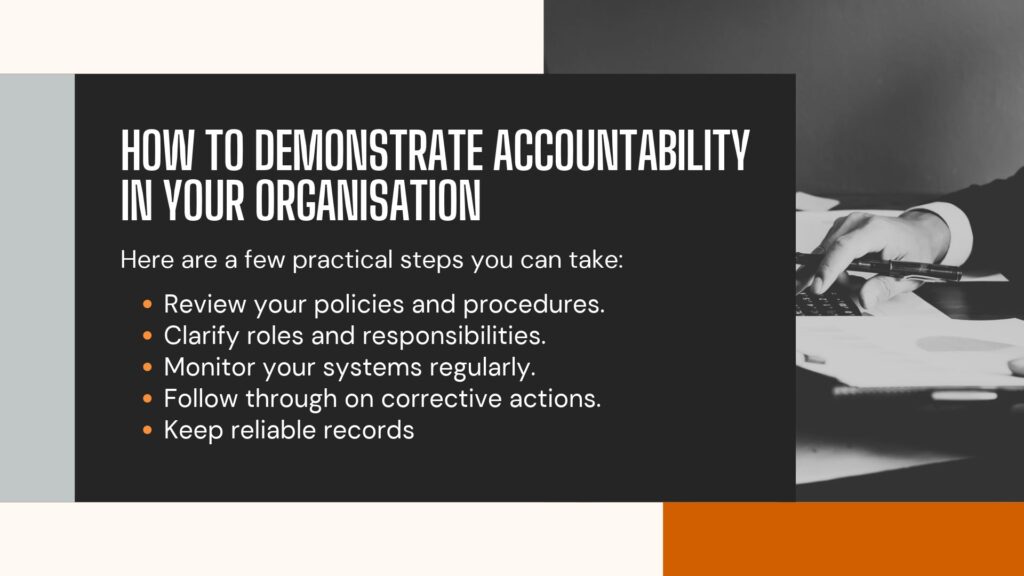
Here are a few practical steps you can take:
- Review your policies and procedures. Check that they reflect your current services and regulatory obligations.
- Clarify roles and responsibilities. Make sure everyone knows who oversees compliance, manages risks and follows up on concerns.
- Monitor your systems regularly. Review incidents, feedback and quality checks to identify areas that need attention.
- Follow through on corrective actions. Assign responsibility for each action, set clear timeframes and check the outcome.
- Keep reliable records. Document important decisions, reviews and actions so you can show how your organisation manages its responsibilities.
These steps help you make accountability part of your daily operations instead of treating it as a task you complete before an assessment.
Accountability Beyond Registration
Registration doesn’t end your responsibilities. As your service grows and changes, you need to review your systems to ensure they continue to support safe, quality care. Regular checks help you spot issues early, manage risks and show how your organisation meets its obligations. They also help you prepare for regulatory reviews by showing how you monitor performance and follow through on actions.
At SAH Consulting, we help aged care providers understand their responsibilities and assess whether their governance systems meet regulatory expectations. If you need support strengthening accountability in aged care, contact SAH Consulting. We’ll help you identify gaps and find practical ways to improve your systems.